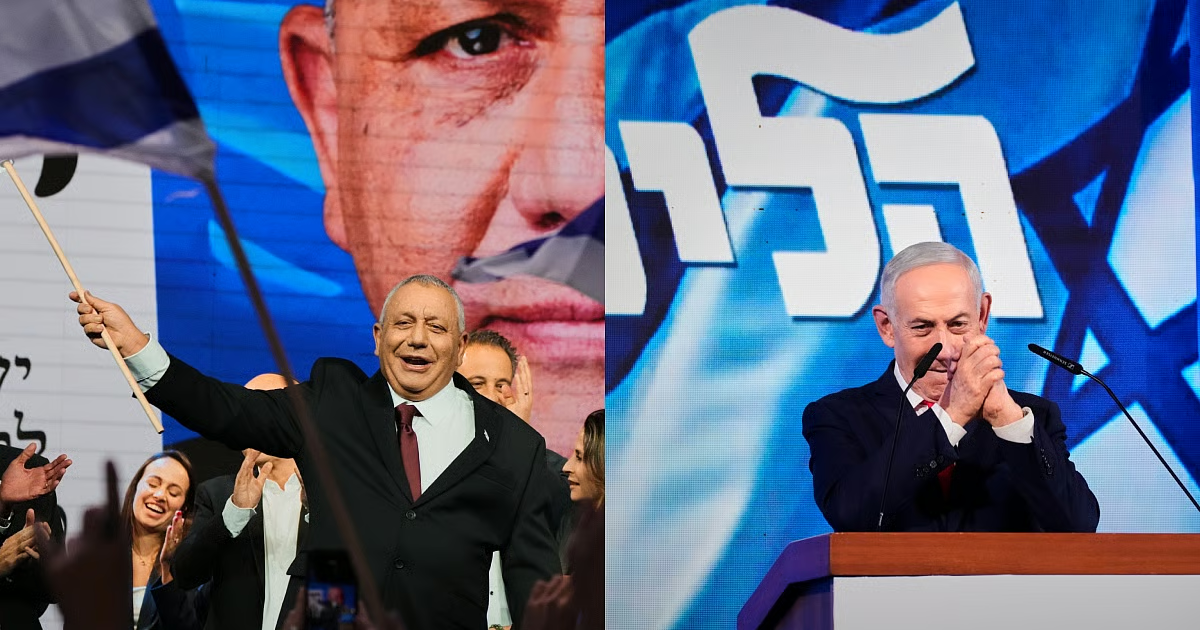
Tel Aviv: Israel’s parliamentary election on October 27, 2026, left Prime Minister Benjamin Netanyahu’s right-wing and religious bloc short of a majority, setting the stage for potentially difficult coalition negotiations. The election was the first since the Hamas-led attacks of October 7, 2023, and the subsequent wars in Gaza, Lebanon and Iran.
Voter turnout reached 77.7%, the highest since 1999, reflecting strong public engagement in a contest widely viewed as a referendum on Netanyahu’s leadership, security policies and handling of the multi-front conflicts.
Near-final projections put Netanyahu’s bloc at around 53 seats in the 120-member Knesset, below the 61 required for a majority. The opposition’s Change bloc, led by former Israel Defense Forces chief Gadi Eisenkot, was projected to secure approximately 48 seats, while Arab-led parties were expected to win a record 19 seats.
Netanyahu’s Likud emerged as the largest single party with 27 seats. Eisenkot’s centrist Yashar party was projected to win 21 seats, followed by B’Yachad, associated with Naftali Bennett and Yair Lapid, with 12. The Joint List was projected to secure 11 seats, while Ra’am was expected to win eight.
The results marked a significant setback for Netanyahu’s coalition, which completed a full four-year parliamentary term for the first time in decades but lost substantial electoral ground. His bloc’s projected tally was considerably below its previous strength of approximately 64–68 seats.
Eisenkot, who founded Yashar in 2025, has called for a commission of inquiry into the failures surrounding the October 7 attacks, broader national service obligations and a government capable of uniting Israeli society. He has ruled out serving under Netanyahu.

Arab parties also strengthened their parliamentary representation following a sharp increase in voter participation. However, their potential role in coalition formation remains complicated by opposition from several Zionist parties to relying on Arab parties for government support.
Netanyahu will remain caretaker prime minister while the final results are certified. President Isaac Herzog is expected to consult party leaders before assigning a candidate the task of forming a government.
Coalition negotiations could take several weeks, with possible outcomes including a broader unity government, defections that strengthen either bloc, or an opposition-led arrangement requiring external Arab support. If negotiations fail, another election could become necessary.
Although nearly all votes have reportedly been counted, the results remain subject to official certification. The election has left Israel facing renewed political uncertainty, with both major camps seeking a viable path to power.













 https://www.youtube.com/watch?si=RtToJsBhYBatUrym&v=mOuYNSdhjHA&feature=youtu.be